QR Code Payments – Why They’re Replacing Card Readers
 Pay on QR
·
·
Updated August 3, 2026
·
4 min read
Pay on QR
·
·
Updated August 3, 2026
·
4 min read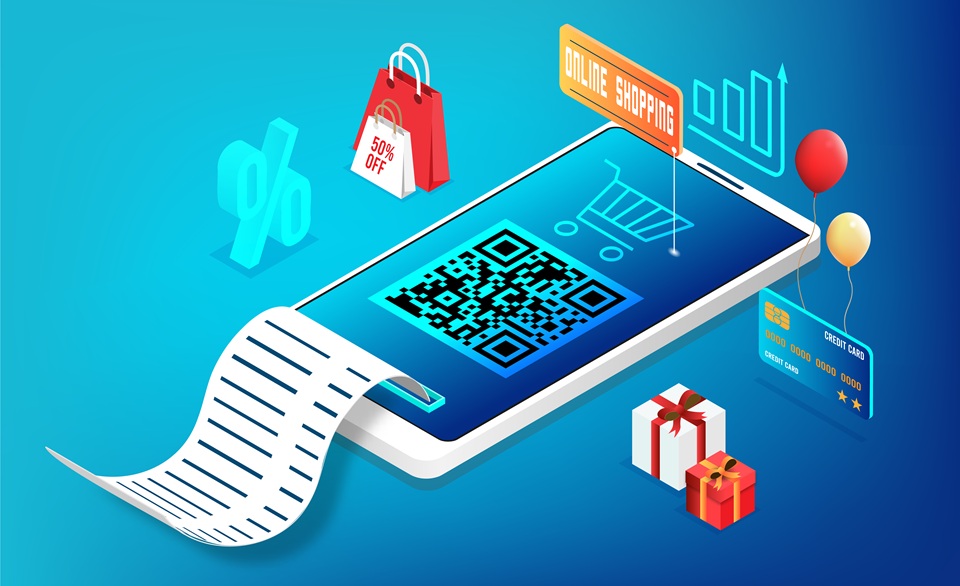
QR code payments are quietly replacing the card reader as the default way small businesses get paid. Somewhere in a drawer at a small business near you, there’s an old card reader that needs charging every other day and won’t always pair with the till on the first try – while the customer stands there, phone already unlocked, ready to pay in three seconds if only there were a code to scan instead.
That’s not a hypothetical. It’s happening right now in salons, food trucks, market stalls, and pop-up shops across Europe, and it’s why more owners are switching to QR code payments every month.
Why QR Code Payments Are Replacing Card Readers
Three reasons, mainly: cost, setup time, and hardware dependency.
- Cost. A card reader runs €50 to €300 upfront, often with a monthly rental fee on top.
- Setup time. Ordering hardware and pairing it with your till is rarely a same-day process.
- Hardware dependency. A dead battery or lost signal means no payments at all until it’s fixed.
This approach avoids all three problems at once. There’s no battery to charge and no pairing to lose. If a printed code gets a coffee stain on it, printing a replacement costs almost nothing.
How QR Code Payments Actually Work
The mechanics are simpler than most business owners expect.
Step 1: Generate a code
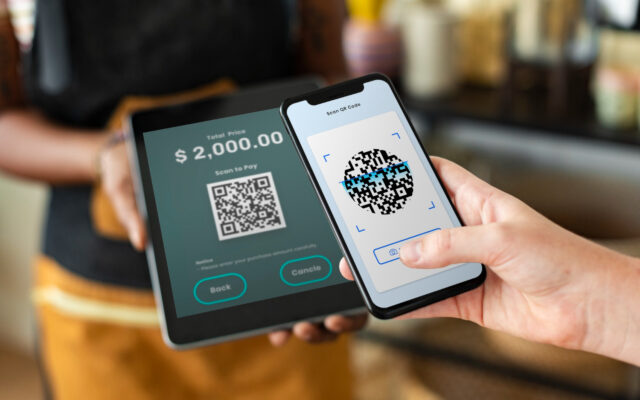
The merchant enters an amount – or selects a saved service with a fixed price – and a unique code is generated instantly on their phone or tablet screen.
Step 2: The customer scans it
Using nothing more than their phone’s built-in camera, the customer scans the code. No app to download, no account to create.
Step 3: They pay, and the money moves
The scan opens a secure checkout page where the customer pays by card, Apple Pay, or Google Pay. This is the moment that matters most: funds settle directly, and the merchant never touches or sees the card details.
What Are QR Code Payments, Exactly?
Definition: QR code payments are transactions where a scannable code, generated by the merchant, encodes a secure link to a payment page. The customer’s phone camera reads the code and opens that page, where payment completes – card, Apple Pay, or Google Pay – without any physical card-reading hardware involved.
Why Small Businesses Are Making the Switch
- No upfront hardware cost
- Nothing to charge, pair, or carry around
- Works on any phone the business already owns
- A printed code on the counter works even when the owner isn’t there
- Setup takes minutes, not days
For most small, service-based businesses, this approach isn’t just adequate. They’re often quicker to set up and cheaper to run than the alternative sitting in that drawer.
Is It Actually Safe?
This is usually the first question owners ask, and it’s a fair one. When they’re built on a real payment processor – like Stripe, which is PCI DSS Level 1 certified, the highest level in the payments industry – they’re handled to the same security standard used by major global platforms. The merchant’s device never touches or stores card data; that happens entirely on the processor’s own secure servers.
Who QR Code Payments Are For (and Who They Aren’t)
QR code payments make the most sense for businesses that take payments face-to-face and want to avoid hardware costs: hairdressers, cosmeticians, market vendors, mobile services, pop-ups, and small studios. A high-volume retail counter with dozens of transactions a minute may still move faster with a dedicated terminal in that specific context. For everyone else, QR code payments are usually the simpler, cheaper choice – however, the right answer always depends on how and where you actually take payments.
Frequently Asked Questions
What are QR code payments?
QR code payments let a customer pay by scanning a code with their phone camera, which opens a secure checkout page. No card reader or app download is required.
Do I need special hardware for QR code payments?
No. Any phone, tablet, or even a printed piece of paper with the code on it is enough. There’s no dedicated terminal to buy or maintain.
Are QR code payments safe for my business?
Yes, when built on a certified processor like Stripe. Card details are handled entirely on the processor’s secure servers – the merchant’s device never sees or stores them.
Can customers without a QR scanner app still pay?
Yes. Every modern smartphone camera, iPhone and Android alike, can scan a QR code natively, without a separate scanner app.
How much do QR code payments cost to accept?
With PAY on QR, there’s no monthly subscription – just a small percentage per successful payment, starting at 1.0%, with no hardware purchase required.
Ready to Try QR Code Payments?
Setting up takes less than two minutes, and there’s nothing to buy.
Already have an account?

Related articles
QR Code Payments for Service Businesses (Full Guide)
QR code payments for service businesses replace the terminal for deposits, no-shows, and remote payments. Here's how the setup actually…

Payment Processing Fees: Are You Overpaying in 2026?
Every card payment gets a slice taken off the top - but most owners have no idea if their rate…
Over 1К Merchants Use PAY on QR: Here Are the Top Performing Niches
Introduction: The QR Code Payment Explosion Over 1,000 active merchants have onboarded onto PAY on QR (payonqr.com), transforming how small…